
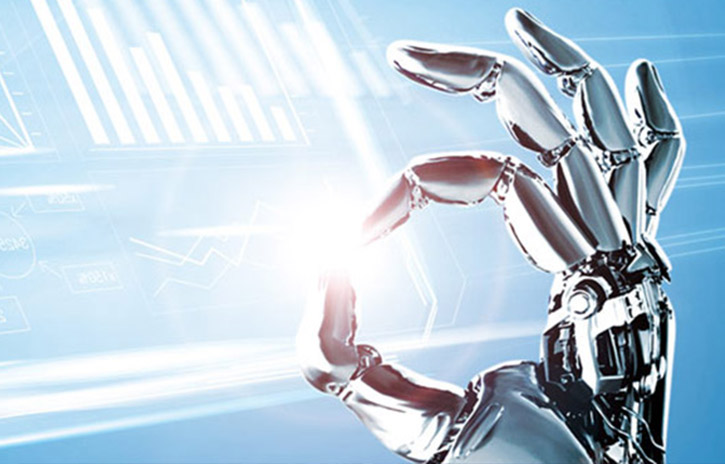
A small robot, humming light crisp music, glides nimbly past workers on site and smoothly transports several auto parts to the next workstation. This is not a futuristic scene depicted by renowned science fiction writer Isaac Asimov. It is a real Industry 4.0 production setup witnessed by reporters during an on-site visit to the Volkswagen plant in Bratislava, capital of Slovakia. Robots take part in the manufacturing of vehicles ranging from Volkswagen Touareg and Audi A8 to Porsche Cayenne here.
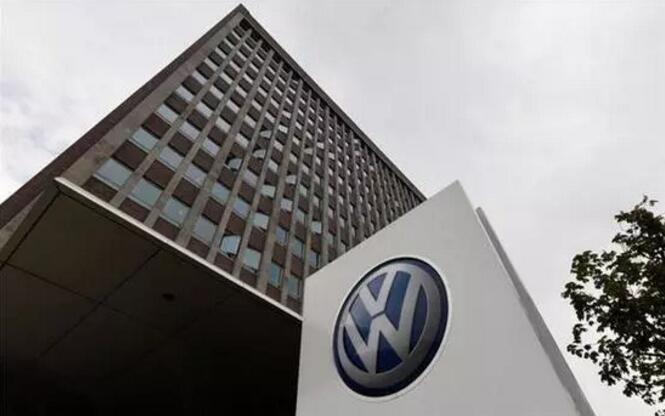
Volkswagen’s Industry 4.0 Initiative Volkswagen ranked 6th on the 2017 Fortune Global 500 list. The Volkswagen Group currently owns 12 brands including Volkswagen, Audi, Porsche, Lamborghini, Bentley and MAN. It operates 120 factories worldwide with more than 620,000 employees and an annual automobile output of over 10 million units. Despite the prior Dieselgate scandal, the Group posted a record profit of 14.6 billion euros in 2016 excluding special items. Volkswagen remains an aircraft carrier in the global automotive industry.
Nevertheless, confronted with fierce competition in the auto industry, especially severe challenges in digitalization, autonomous driving and electric vehicles, this "aircraft carrier" is proactively pursuing transformation. According to the latest plan provided by Volkswagen to reporters: by 2025, all production bases of the Volkswagen Group, including its factories in China, will realize digital planning and seamless network switching to guarantee self-controlled, self-optimized and sustainable production.
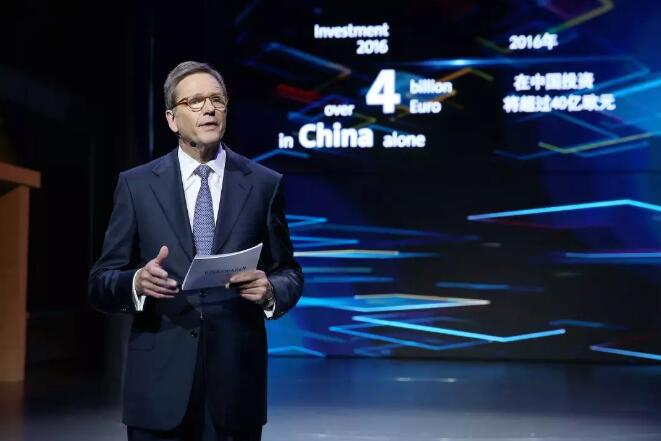
“Technically speaking, digitalization covers a wide range of technologies, such as cognitive computing and learning, artificial intelligence, the acquisition of new skills and technologies, as well as processes related to machine self-optimization and self-learning,” said Jochem Heizmann, Member of the Board of Management of Volkswagen Group and President & CEO of Volkswagen Group China, in an exclusive interview with reporters at the Wolfsburg headquarters. Digitalization is an overarching concept. More specifically, it refers to the digitalization of the entire production process and elements associated with Industry 4.0.
In Heizmann’s view, Industry 4.0 is a highly integrated concept that encompasses digitalization, robotics and artificial intelligence, which are being integrated into all aspects of Volkswagen Group’s daily business operations.
Production 4.0 within manufacturing workflows is part of the broader Industry 4.0 concept, and Industry 4.0 includes Production 4.0. Starting from research and development, Production 4.0 runs through design and every stage of production, involving digital management tools, digital technologies and the application of automated workflows.
Whether it is Production 4.0 or Industry 4.0, both represent a digital process spanning corporate operations and the entire product manufacturing lifecycle. Examples include the application of VR (Virtual Reality), smart devices, wearables and 3D printing technology. Besides, there are other specialized application areas: automated transportation in logistics, AI-enabled logistics process management, maintenance of production equipment, and maximization of overall production workflows.
The concepts of Industry 4.0 or Production 4.0 are not limited solely to production flexibility. They are closely linked to the improvement, optimization and enhancement of product R&D, manufacturing, logistics, sales, after-sales service and customer experience. “Some technologies need to be rolled out step by step. They cannot be achieved overnight; it takes time.”
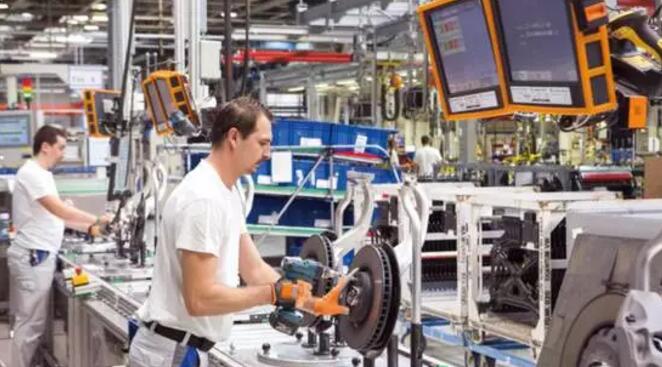
30,000 Industrial Robots
At a section of the assembly line in the Volkswagen workshop in Wolfsburg, home to Volkswagen Group’s headquarters, a frontline German female worker and her colleagues are busy on the production line installing instrument panels and other automotive interior components. Working alongside her is a large robotic arm. The robotic arm skillfully reaches through the vehicle window and fits the instrument panel smoothly within just a few minutes. Assisted by robots, workers here can pause to listen to music, relax, and even chat with reporters.
Unlike the old setup where humans and machines were isolated from separate zones, direct synchronous collaboration between people and intelligent robots is no longer a distant vision, as robots can respond to every human gesture. The Smart Production Lab within the IT department at Volkswagen Group Headquarters is developing solutions for future automobile manufacturing. One project focuses on intelligent robots, enabling genuine hand-in-hand collaboration between humans and machines for the first time. This is made possible by equipping robots with the capability to perceive and take human intentions into account.
Dr. Wolfgang Hackenberg, Director of the Smart Production Lab in the Group’s IT department, is currently leading his team to develop this technology together with experts from DFKI, the renowned German Research Center for Artificial Intelligence.
Dr. Hackenberg explained to reporters that previously, humans and robots had to operate with separate workflows and independent workspaces, which was not real collaboration. Things are entirely different in the Smart Production Lab. “We integrate robots and sensors via software so that humans and robots can avoid hazards, work within the same space and even cooperate with each other. In this way, we achieve direct synchronous human-machine collaboration for the first time.”
In addition, the world-class challenge of boosting human physical efficiency by applying ergonomic principles is expected to be solved. For industrial robots, this translates to enormous energy-saving potential. Dr. Dieter Geckler, member of Volkswagen Group’s Digital Factory Working Group and head of the Energy Efficiency Team, told reporters: “To conserve physical strength, weightlifters shift their feet to find an ideal balance point before lifting weights. Much like weightlifters, robots can save substantial amounts of energy when positioned correctly.”
Nevertheless, this user-friendly software is not yet a finished product. Position optimization is only the first step. The team is now researching robot path optimization to achieve further energy savings. This stage calculates the most energy-efficient movements for robots. The third and final step will allow the software to optimize robot acceleration and speed. This optimization software maximizes efficiency in robot positioning, path planning and velocity, delivering energy savings of up to 30%. It was scheduled for launch in 2018.
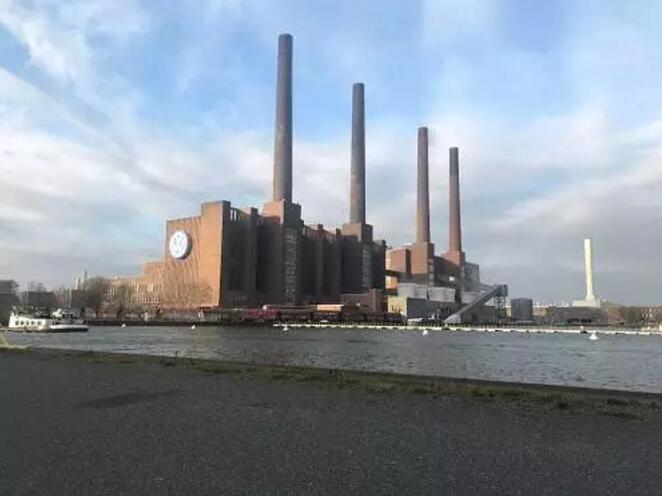
Volkswagen Plant Car Manufacturing in Seconds
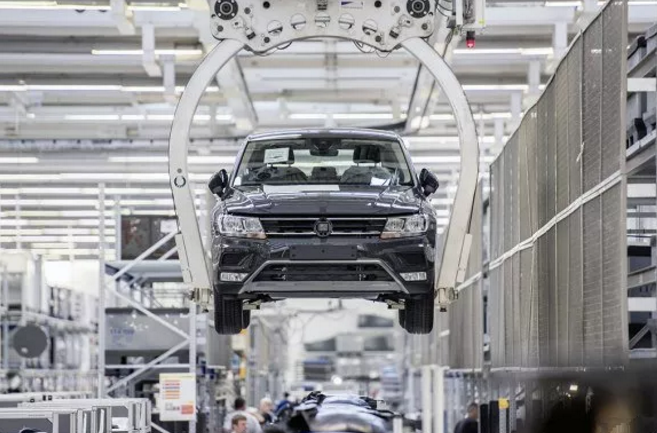
At Volkswagen’s plant in Slovakia, it currently takes only 2.5 minutes to complete the final assembly of three vehicles, which means the assembly time for one car is 0.83 minutes, approximately 50 seconds. Automobile manufacturing is now measured in seconds, truly entering the era of car production in seconds. Nevertheless, from Volkswagen’s perspective, this efficiency is still insufficient. Its ultimate goal is to achieve fully autonomous production. The so-called autonomous production does not mean eliminating human workers entirely. Instead, humans specify what products need to be manufactured, and then robots inside the factory automatically form production lines to carry out manufacturing.
According to Volkswagen’s vision, there are at least two key prerequisites to realize such autonomous production. The first is mobile production robots. The second is a central nervous system built on big data and AI processing technologies.
Reporters saw prototypes of these two technologies at Volkswagen’s SPL Smart Production Lab. The mobile robot consists of a mobile base fitted with two robotic arms. It relies on LiDAR and 3D depth cameras for positioning and navigation, enabling autonomous movement within the factory. The other component is a super system capable of tracking all production data. It can analyze which robots and components are required for manufacturing each vehicle model, and then automatically allocate robots and parts according to production tasks. More importantly, with the adoption of artificial intelligence and other technologies, the system can self-learn while organizing production processes. It continuously optimizes workflows in subsequent production runs to further improve production efficiency.
On the automobile assembly line, a worker and a robot can sit together inside the car body to complete all kinds of assembly operations. The production system is operated by social machines that automatically connect to the cloud platform to find specialists capable of solving various problems. These specialists master full maintenance techniques and virtual tools. Robots automatically integrate all information to continuously improve their performance. The above scenario is a hard-sci-fi-like future automotive production scene described in Roland Berger’s 2016 report, parts of which have now been realized in Volkswagen’s factories.